
Current friction
Where work stalls, duplicates, waits, or loses context.
Use Case
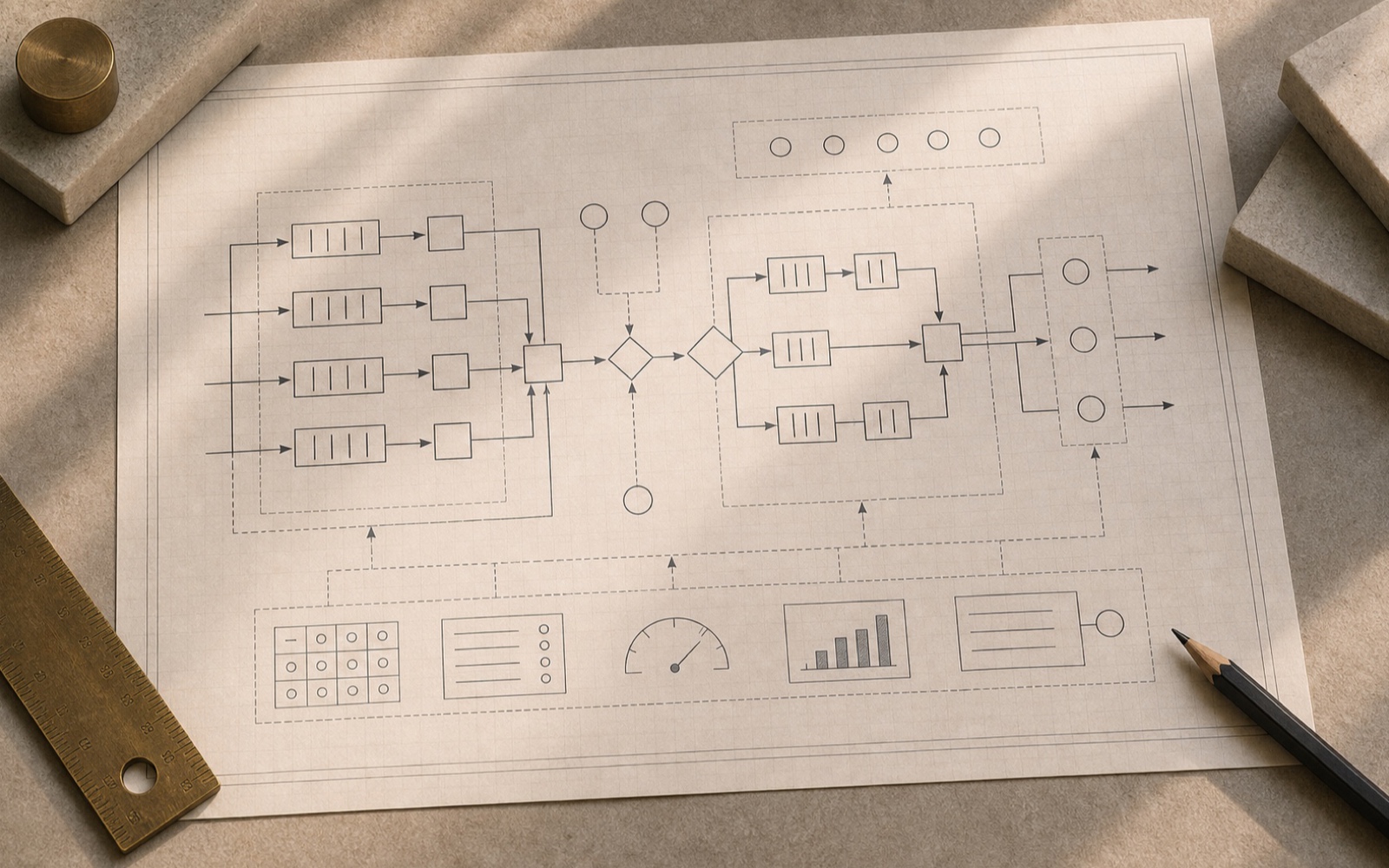
Operations teams need AI to monitor the real flow of work, not summarize a cleaned-up version after the fact.
What We Assess
Where work stalls, duplicates, waits, or loses context.
Who can decide, approve, escalate, or stop the work.
The map, rules, and notes the team can use after the scan.
The Pattern
Status gets unreliable when capacity, blockers, and escalations are collected outside the workflow. We make the operating signal traceable so AI can flag the right exceptions.
What Changes
Recurring steps and exceptions become clear enough to improve.
Decisions sit at the right point, and AI stops where judgment is needed.
Context moves with the work instead of being rebuilt each time.
The team gets the logic and ownership model.
Redesign Surface
Status is rebuilt manually from tools, meetings, and remembered exceptions.
Capacity, blockers, owners, signals, and escalation paths are captured as the work moves.
A reporting pattern with trigger points, owners, AI-monitoring rules, and escalation notes.
BeforeFragmented inputs and unclear owners.
Work moves by memory, meetings, and side-channel context.
Each cycle rebuilds the same explanation.
AfterRecurring steps, decisions, and exceptions are visible.
The right actor owns the right part of the flow.
The team receives rules and notes for the next cycle.
Operational Rule
A workflow is not ready for AI until decisions, exceptions, ownership, and stop conditions are visible.
Bring this workflow as the first surface. We will map the current state and define where AI can safely help.
Book a workflow scan